

- Final Season Report: Autumn 2026
- Mount Manaslu 8,163 m / 26,781 ft, Nepal
- Expedition Season: September 2026
- Report Date: 23 September 2026
- Status: Season Concluded-Summit Operations Cancelled
Season Overview: The Autumn 2026 Manaslu Expedition season became one of the most challenging recent climbing seasons on Nepal's eighth-highest mountain. Mount Manaslu, standing at 8,163 metres (26,781 ft), attracted a record-scale field of international climbers and Nepali high-altitude support personnel. Reports placed the number of foreign climbing permits at 466 by 17 September, while subsequent reporting cited approximately 480–493 foreign climbers, depending on the date and counting method.
The season began with significant logistical difficulties on the approach, followed by challenging route-opening conditions, avalanches, heavy snowfall and rapidly deteriorating weather at higher elevations.
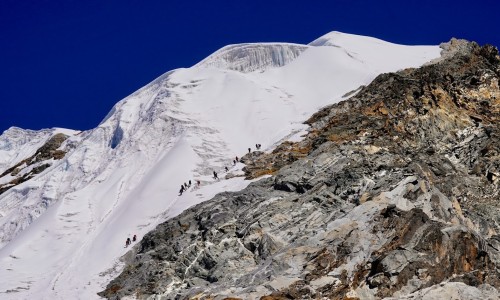
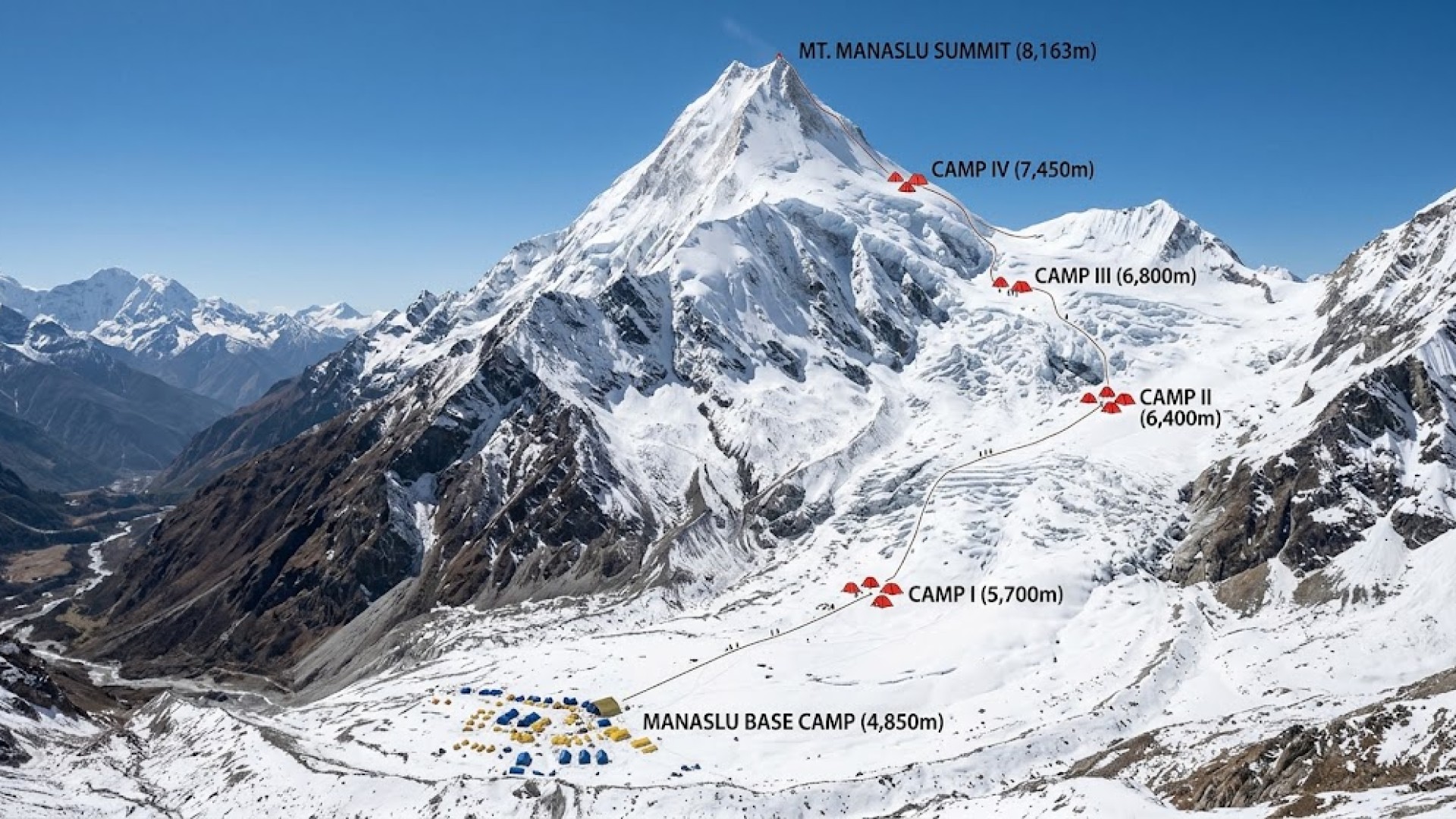
The collective rope-fixing team successfully reached the summit on 17 September 2026, completing the fixed route to the top of Manaslu. However, conditions deteriorated dramatically in the following days. Fresh snowfall buried sections of the route, avalanche danger increased above Camp III, and expedition teams were subsequently forced to retreat.
By 22 September, several major expedition operators had cancelled their summit operations and begun withdrawing climbers and dismantling higher camps. The Autumn 2026 Manaslu climbing season therefore concluded without a general summit push by expedition clients.
1.A Record-Scale Manaslu Season: The 2026 season was among the busiest Manaslu climbing seasons on record. By 17 September, 466 foreign climbers from 39 teams had obtained permits according to reporting citing the Department of Tourism. Later reports cited approximately 480 climbers, while some subsequent reports referred to 493 permits. These differences reflect reporting at different stages of the season. The international climbers were supported by a large contingent of Nepali Sherpa guides, high-altitude workers, cooks, porters and Base Camp personnel. The scale of the operation placed substantial logistical demands on the mountain, particularly during the short period available for acclimatization, route fixing and summit preparation.
2. Difficulties on the Approach: The challenges began before teams reached the upper mountain.
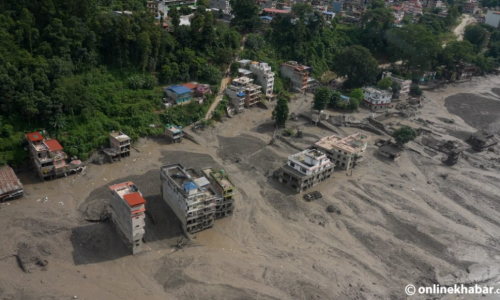
On 6 September, flash flooding around Namrung in Chumnubri Rural Municipality–4, Gorkha, damaged or washed away bridges along the Manaslu trekking route and affected local infrastructure. The flooding also damaged hydropower facilities and temporarily disrupted movement through the area.
Local communities subsequently established temporary crossings and alternative routes. The Nepal Tourism Board reported on 11 September that damaged structures along the affected section had been restored sufficiently for trekking and that the earlier restriction had been lifted.
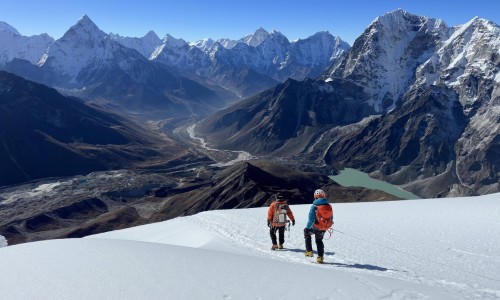
Despite these difficulties, expedition teams reached Base Camp and began acclimatization and preparation for higher rotations.
3. Route Opening and Rope Fixing: The summit route was prepared under the management of the Expedition Operators Association of Nepal (EOA/EOAN) and its collective rope-fixing team.
The operation encountered difficult conditions above Camp III.
On 16 September, an avalanche affected the route above Camp III and buried or displaced sections of fixed rope and climbing equipment. The rope-fixing operation was temporarily interrupted, requiring additional Sherpa personnel to carry replacement equipment and approximately 1,300 metres of rope toward Camp III.
The route-fixing team subsequently resumed its work and continued toward the summit.
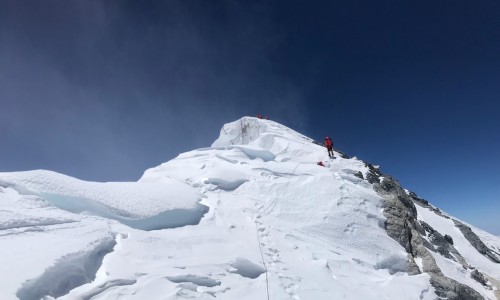
4. Summit Route Successfully Reached: At approximately 9:25 p.m. Nepal time on 17 September 2026, the collective rope-fixing team reached the summit of Mount Manaslu at 8,163 metres, completing the summit route for the Autumn 2026 season.
This was a significant operational achievement for the Sherpa rope-fixing team. However, the completion of the fixed route did not guarantee that subsequent summit attempts would be safe. Within days, the mountain environment changed substantially.
5. Heavy Snowfall and Avalanche Danger: Following the route-opening operation, Manaslu experienced persistent snowfall and deteriorating weather. Fresh snow progressively accumulated on the upper mountain and buried sections of the fixed route. Avalanche danger increased, particularly around and above Camp III.
The changing conditions demonstrated an important distinction in Himalayan mountaineering:
A technically opened route is not necessarily a safe route.
Expedition teams must continuously reassess snow stability, avalanche exposure, visibility, weather forecasts, route conditions, and the ability of climbers and support teams to move safely.
By 22 September, reports from the mountain indicated that teams at Camp III could not safely progress toward Camp IV because of fresh snow and avalanche danger.
6. Four Reported Fatalities During the 2026 Season
The Autumn 2026 Manaslu season was also marked by the tragic loss of four people.
Reported Fatalities
|
Name |
Nationality |
Role |
Reported Circumstances |
|
Tashi Sherpa |
Nepal |
Climbing support staff/porter |
Died earlier in the season at Manaslu Base Camp |
|
Lau Wee Seng |
Singapore |
Climber |
Died on 17 September while descending from around Camp II during an acclimatization rotation |
|
Dhruba Jyoti Guha |
Germany, Indian origin |
Climber |
Killed in an avalanche at Camp III |
|
Phursemba Sherpa |
Nepal |
Sherpa climbing guide/support staff |
Killed in the same Camp III avalanche |
Total reported fatalities: 4.
1. Tashi Sherpa: Nepali climbing-support worker Tashi Sherpa, reported to be 20 years old, died earlier in the season. Reports identified him as a local porter/support worker who died at Base Camp.
2. Lau Wee Seng: Lau Wee Seng, a 50-year-old climber from Singapore, died on 17 September while descending from approximately 6,000 metres near Camp II during an acclimatization rotation.
3. Dhruba Jyoti Guha: Dhruba Jyoti Guha, a German national of Indian origin, died at Camp III after an avalanche struck the tent in which he was staying.
4. Phursemba Sherpa: Phursemba Sherpa, a Nepali Sherpa guide from the Makalu region, died in the same Camp III avalanche as Guha. Reports stated that the two were found beneath approximately seven feet of snow after the avalanche buried their tent.
Xtreme Climbers Condolences
Xtreme Climbers Treks & Expeditions extends its deepest condolences to the families, friends, climbing partners, colleagues and communities of Tashi Sherpa, Lau Wee Seng, Dhruba Jyoti Guha and Phursemba Sherpa. Their loss is a solemn reminder that high-altitude mountaineering carries inherent risks and that the safety and wellbeing of climbers, Sherpa guides and every member of the mountain-support team must remain a fundamental priority.
7. Summit Operations Cancelled: Following several days of heavy snowfall and increasing avalanche danger, expedition leaders reassessed the possibility of continuing toward the summit.
On 22 September, multiple major expedition operators reported that their teams were retreating from the higher camps. The rope-fixing team also stopped further work because of deep snow and avalanche danger.
Several operators subsequently announced the cancellation or closure of their Manaslu 2026 summit operations. The decision followed reports that conditions above Camp III were unsuitable for safe movement toward Camp IV, while further adverse weather was forecast.
The mountain therefore entered the closing phase of the 2026 expedition season without a viable general summit window for client teams.
8. Final Season Assessment: The Autumn 2026 Manaslu season provides a clear illustration of one of the fundamental realities of Himalayan mountaineering:
The summit is an objective; the safe return is the responsibility.
The collective rope-fixing team successfully completed the route to the summit on 17 September. Yet within only a few days, fresh snow, buried fixed lines, avalanche activity and deteriorating weather transformed the operational situation. For professional expedition operators, route preparation is only one component of a safe summit attempt. Conditions must continue to be assessed throughout every stage of the expedition.
When the mountain environment exceeds an acceptable level of risk, withdrawal becomes an essential part of responsible expedition management. No summit objective should take precedence over the safety of climbers, Sherpa guides, route-fixing personnel and support staff.
9. Key Lessons from Manaslu 2026
- Weather Remains the Controlling Factor
Even with experienced mountain professionals, modern equipment and a fixed route, Himalayan weather can change rapidly and fundamentally alter expedition conditions.
- Route Opening Does Not Guarantee Summit Conditions
The summit route was successfully completed on 17 September, yet heavy snowfall soon buried portions of the route and increased avalanche danger.
- Continuous Avalanche Assessment Is Essential
The avalanche activity around Camp III reinforced the need to reassess snow stability and route conditions continuously rather than relying on earlier conditions.
- Expedition Plans Must Remain Flexible
A summit schedule should always allow sufficient flexibility for weather delays, route changes, additional acclimatization or withdrawal.
- Safety Must Remain the Fundamental Priority
Professional mountaineering is not defined only by reaching the summit. Responsible decision-making includes knowing when conditions no longer justify continuing.
10. Xtreme Climbers, Official Statement
Xtreme Climbers Treks & Expeditions recognizes Mount Manaslu as one of the world's great 8,000-metre challenges and respects the mountain's demanding and unpredictable environment. The Autumn 2026 season was a powerful reminder that Himalayan expeditions are governed not only by preparation, experience, equipment and determination, but ultimately by weather, snow conditions, route stability and the mountain itself.
We express our sincere respect and appreciation to the climbers, Sherpa guides, collective rope-fixing teams, expedition leaders, high-altitude workers, cooks, porters, rescue personnel and Base Camp staff who worked throughout this exceptionally difficult season. Our deepest condolences go to the families and communities affected by the four reported fatalities on Manaslu during the 2026 season.
For future expeditions, Xtreme Climbers remains committed to professional expedition planning, experienced Sherpa leadership, responsible acclimatization, continuous assessment of mountain conditions, and careful decision-making throughout every stage of an expedition.
The fundamental priority remains the safe return of every expedition member.